Jury Rules for Defense in Connecticut Construction Fall Case

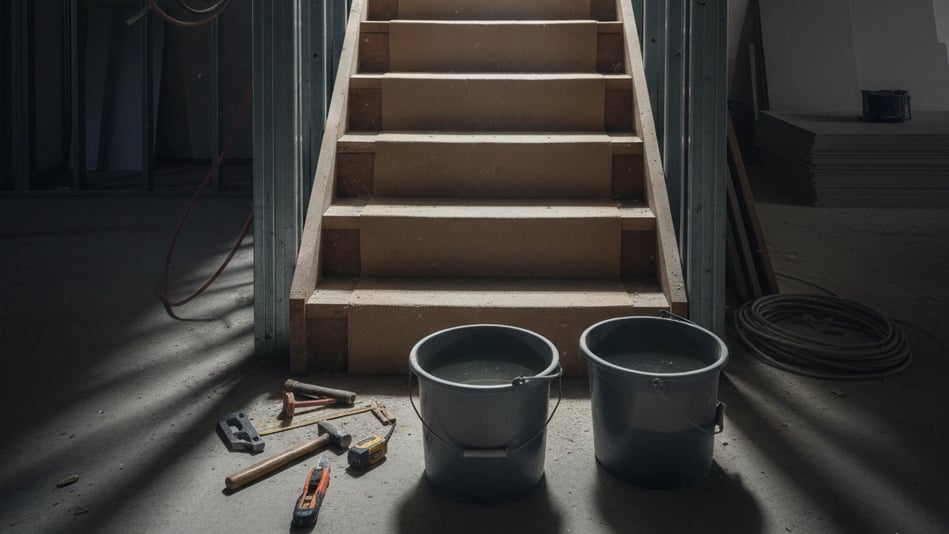
Table of Contents
Case Background
A Connecticut jury returned a verdict on January 16, 2026, in a premises liability case filed in the Superior Court of Connecticut, Judicial District of New Haven. The Plaintiff, Kenneth Romans Jr., alleged severe injuries after falling on a construction site in Branford, Connecticut. The case, docketed as NNH-CV23-6132259-S, concluded with a unanimous jury finding that the Defendant was not negligent in any of the ways alleged by the Plaintiff.
Cause
The incident occurred on April 6, 2021, at a residential property located at 8 Fellsmere Farm Road in Branford, Connecticut. Kenneth Romans Jr. was working at the site as a subcontractor or independent contractor. According to the complaint filed on April 3, 2023, Romans was ascending stairs from the basement to the first floor while carrying two pails of water. He alleged that his foot caught on an unsecured or improperly secured portion of a ram board, which is a protective covering used on construction sites. The fall caused him to strike his head, resulting in what his attorneys described as catastrophic injuries.
Injury
Romans was transported by ambulance to Yale New Haven Hospital for emergency treatment following the fall. His complaint documented an extensive list of injuries including cerebral hemorrhage, chronic headaches, dizziness, right frontal scalp hematoma, and a deep laceration to the scalp requiring deep dermal sutures. The most significant injury involved severe cervical spinal canal stenosis that required neurosurgical intervention. Romans underwent a C3-C6 posterior cervical decompression and fusion procedure, which included laminectomies with bilateral foraminotomies and partial facetectomies. The surgery left him with permanent partial impairment to the cervical spine. Additional injuries cited included a large disc herniation at T4-5 causing severe spinal canal narrowing, cervical spondylotic myelopathy, numbness and weakness in both hands, unsteady gait with weakness in both legs, neuropathic pain, and multiple thoracic disc protrusions with permanent partial impairment of the thoracic spine.
Damages Sought
The Plaintiff sought money damages exceeding fifteen thousand dollars, exclusive of costs and interest, according to the Statement of Amount in Demand filed with the complaint. Romans claimed he incurred expenses for medical care, neurosurgical treatment and surgery, hospital stays, MRI and CT scans, EMG testing, X-rays, physical therapy, prescriptions, and medical supplies. He also sought compensation for lost wages, impairment of work capacity, pain and suffering, decreased range of motion, muscle spasms, mental anguish, and loss of life's pleasures.
Key Arguments and Proceedings
Legal Representation
Plaintiff: Kenneth Romans Jr.
· Counsel for Plaintiff: Robert C. Pinciaro, Esq.
· Experts for Plaintiff: Michael DiLuna | Christopher Kolker
Defendant: Donald Welch LLC
· Counsel for Defendant: James F. Shields
Key Arguments or Remarks by Counsel
The case also named Victoria Eliza Sinapis as a co-Defendant. Sinapis was identified as the property owner at the time of the incident. Attorney Thomas M. Noniewicz of the Law Offices of Cynthia M. Garraty represented Sinapis. The final judgment and verdict form only addressed the claims against Donald Welch LLC, indicating the claims against Sinapis were resolved separately or dismissed before trial.
Claims
Improper Ram Board Installation
The Plaintiff argued that the ram board was improperly and inadequately applied and installed on the stairway, causing it to malfunction and remain in a defective and dangerous condition.
Inadequate Lighting
Romans alleged there was inadequate or no lighting in the basement area, creating a dark and dangerous environment.
Failure to Install Handrails
The complaint asserted the Defendant failed to install handrails on the stairway.
Failure to Inspect and Remedy
The Plaintiff claimed the Defendant failed to adequately make proper and reasonable inspections to discover the dangerous and defective conditions, failed to remedy and repair those conditions, and failed to maintain proper safeguards, warnings, and signs.
Defense
Donald Welch LLC filed its Answer and Special Defense on August 10, 2023. The defense denied that the LLC was in possession and control of the property and denied any negligence or carelessness. For most of the Plaintiff's factual allegations, the Defendant stated it lacked sufficient knowledge or information to form a belief and therefore denied the allegations, leaving Romans to prove his case. The defense raised a special defense of comparative negligence, arguing that the Plaintiff's own negligence was a substantial factor in causing the accident. Specifically, the defense argued Romans failed to be watchful of his surroundings and pay attention to where he was going, failed to watch where he was stepping, failed to keep a proper lookout, was aware or should have been aware of the risks yet chose to walk without due regard for his own safety, failed to take necessary precautions to observe existing conditions, failed to use reasonable care for his own safety, failed to ensure adequate lighting in the area where he worked if such lighting was insufficient as he claimed, failed to install handrails or ensure handrails existed before working in that area, failed to make proper inspections to discover dangerous conditions, and failed to ensure the work area was safe before commencing work.
Jury Verdict
The Honorable Angelica Papastavros presided over the trial. The jury returned its verdict on January 16, 2026, unanimously finding in favor of the Defendant Donald Welch LLC. On the first question regarding the Plaintiff's status, the jury found that Romans was an invitee on the property at the time of the incident. However, on the critical second question asking whether the Plaintiff proved by a preponderance of the evidence that Donald Welch LLC was negligent in any of the ways alleged, the jury answered no. Because the jury found no negligence on the part of the Defendant, the jury's deliberations concluded without reaching questions about causation, damages, or comparative negligence. The verdict form instructed jurors that if they answered no to the negligence question, their deliberations were finished. The final judgment in favor of the Defendant was entered the same day by the Court.