Cyclist Sues Orlando Over Pothole Injury: Stripling v. City
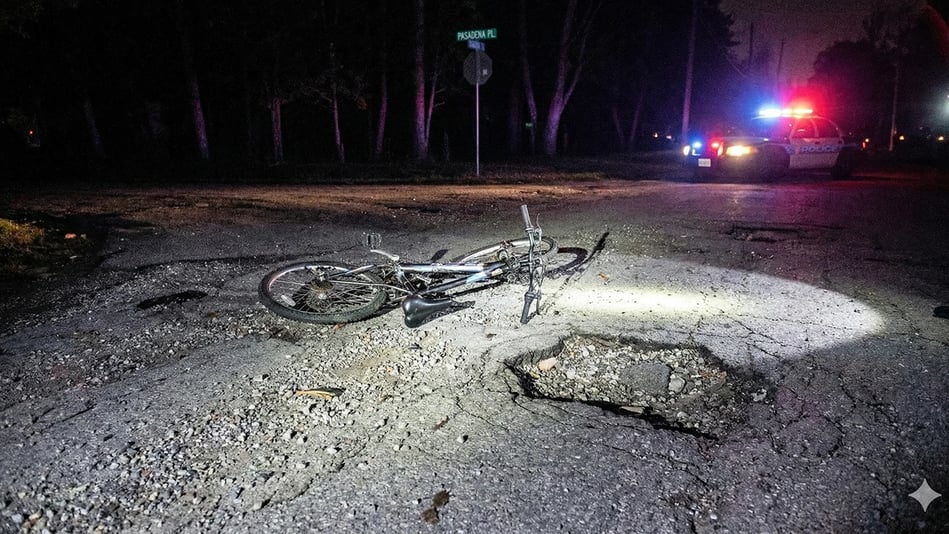
Table of Contents
Case Background
On March 28, 2024, John Stripling filed a civil lawsuit against the City of Orlando in the Circuit Court of the Ninth Judicial Circuit in Orange County, Florida. The legal action centered on a premises liability claim regarding an incident that occurred on public property. Stripling, a resident of Orlando, asserted that the City, as a political subdivision of the State of Florida, bore responsibility for maintaining the safety of its access roads. The plaintiff demanded a jury trial to resolve the dispute, having satisfied the statutory notice requirements necessary to sue a government entity.
Cause
The legal action stemmed from a bicycle accident that occurred on the night of August 14, 2022. John Stripling had been riding his bicycle at approximately 11:30 p.m. along Pasadena Place, an access road in Orlando, Florida. As he traversed the area, he attempted to maneuver around a pothole. However, the roadway allegedly contained loose asphalt and gravel which were not immediately visible due to the general disrepair of the street. Upon encountering this debris and the deteriorated surface conditions, Stripling fell from his bicycle.
Injury
Following the incident, Stripling asserted that he had sustained significant bodily injuries. The complaint detailed that he suffered permanent injury to his body as a whole, alongside physical and mental pain and suffering. Additionally, the Plaintiff reported disability, physical impairment, disfigurement, and mental anguish. He further alleged that the accident had permanently aggravated a previously existing condition and resulted in a loss of capacity for the enjoyment of life.
Damages Sought
To address these harms, Stripling sought damages exceeding $50,000, exclusive of interest and costs. His financial claims included expenses for hospitalization, medical and nursing care, and treatment that he had already incurred and would require in the future. Furthermore, he sought compensation for lost earnings and a diminished ability to earn money in the future. The Plaintiff demanded a trial by jury to determine the fair value of these losses.
Key Arguments and Proceedings
Legal Representation
Plaintiff(s): John Stripling
· Counsel for Plaintiff(s): Sebastian C. Mejía
· Experts for Plaintiff(s): Dax Behrend | Melissa Brown | Frank Avilucea | Sean Hire | Alexandria Tymkowicz | Scott J. Schoedler | Bryan M. Grommersch | Shuan C. Li | Benjamin C. Cornett | Jennie Karalen Ayers | Laura K. Wagner | Peter S. Jiang | Samantha Levin
Defendant(s): The City of Orlando
· Counsel for Defendant(s): Kimberly Laskoff
Key Arguments or Remarks by Counsel
Claims
Attorney Sebastian C. Mejía argued that the City of Orlando had owed a duty of care to John Stripling to exercise reasonable care for his safety while he was on their premises. The Plaintiff's counsel contended that the City had negligently allowed a dangerous condition—specifically an improperly maintained road with multiple potholes and loose debris—to remain on Pasadena Place. They asserted that this condition had existed for a sufficient period, meaning the City knew or should have known about the hazard. The legal team outlined several failures by the City, including the failure to inspect the roadway, the failure to warn the public of the danger, and the failure to place cones or signs to prevent the accident. They argued that these negligent omissions were the direct cause of Stripling's fall and subsequent injuries.
Defense
In response, Assistant City Attorney Kimberly Laskoff denied the liability of the City of Orlando. The defense argued that any injuries Stripling had suffered were proximately caused by the acts or omissions of others, or by intervening causes beyond the City's control. They further contended that Stripling's own negligence had caused or materially contributed to his injuries, suggesting he bore comparative fault for the accident. The defense also raised the issue of pre-existing conditions, asserting that the City held no liability for physical conditions that existed before the incident. Additionally, the City emphasized that its liability was limited by the sovereign immunity provisions of Florida Statute §768.28, which caps monetary damages against government entities.
Jury Verdict
The case proceeded to a jury trial in the Ninth Judicial Circuit Court for Orange County, Florida. On October 24, 2025, the jury returned their verdict after deliberating on the issues of negligence and damages.
Negligence Determination The verdict form required the jury to determine if there was negligence on the part of the City of Orlando that was a legal cause of loss, injury, or damage to John Stripling. Following this, the jury had to decide if there was comparative negligence on the part of John Stripling that contributed to his own injuries.
Apportionment of Fault The jury was tasked with assigning a specific percentage of negligence to each party. The instructions indicated that if the jury found the Plaintiff negligent in any degree, the Court would reduce the total amount of damages by that percentage.
Award of Damages The jury addressed the calculation of reasonable expenses for John Stripling's past hospitalization and medical care. They also determined the total amount of damages for lost wages incurred in the past. Finally, the jury evaluated damages for non-economic losses, including pain and suffering, disability, disfigurement, and loss of enjoyment of life, for both the past and the future.
The foreperson, Chris Femmes, signed the verdict form on the 29th day of October, 2025, finalizing the jury's decision on these matters.
Court Documents