USAA Ordered to Pay $121K in Underinsured Motorist Case
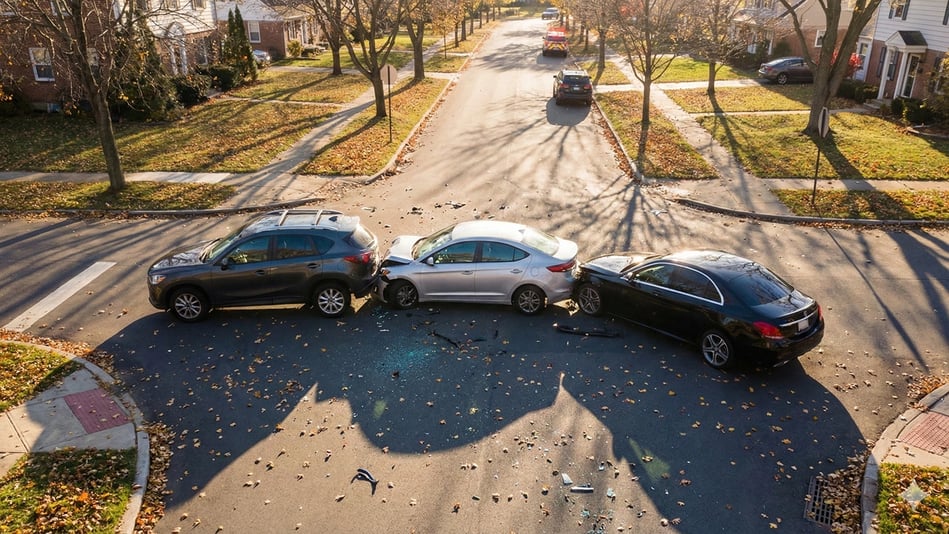
Table of Contents
Case Background
A Friday afternoon drive in Rhode Island transformed into a four-year legal journey for Steven O’Donnell after a violent chain-reaction crash left him with permanent physical limitations. On October 15, 2021, around 3:25 p.m., O’Donnell traveled along Ten Rod Road in Exeter. Traffic ahead forced him to bring his vehicle to a complete stop. Directly behind him, another motorist also halted, waiting for the congestion to clear. Neither driver realized that a third motorist, Niel Riess, approached their line of cars at a speed that made a collision inevitable.
The crash occurred in a split second. Riess failed to slow down and slammed his vehicle into the car stopped directly behind O’Donnell. The momentum of that initial strike propelled the middle vehicle forward like a heavy weight, forcing it to crash into the rear of O’Donnell’s stationary car. In the moments following the impact, O’Donnell realized he had suffered injuries that would eventually require extensive medical intervention. The at-fault driver, Riess, carried a standard insurance policy, but the financial limits of that coverage fell far short of what O’Donnell needed to cover his medical expenses and life-altering pain. After O’Donnell collected the maximum available funds from Riess’s policy, he turned to his own provider, USAA Casualty Insurance Company. He sought the underinsured motorist benefits for which he had consistently paid premiums. When the company refused to provide what he considered fair compensation, O’Donnell filed a lawsuit in the New Haven Superior Court to hold the insurer to the terms of his contract.
Cause
The primary cause of this legal dispute centered on the negligence of the third driver and the subsequent refusal of USAA to honor its policy obligations. O’Donnell argued that Niel Riess had neglected his duty to keep a proper lookout and had failed to maintain reasonable control of his vehicle. Because Riess had not applied his brakes in time, the resulting pileup became an unavoidable tragedy for the drivers in front of him. Since O’Donnell had already exhausted the liability limits of the driver who caused the crash, the legal focus shifted to USAA. O’Donnell claimed that the insurance giant breached its agreement by failing to pay the remaining damages necessary to make him whole.
Injury
The collision caused severe trauma to O’Donnell’s musculoskeletal system. The sudden, violent jolt from the rear-end strike caused what medical professionals identified as significant injuries to his spine and extremities. While the initial shock of the crash momentarily masked the severity of his condition, O’Donnell soon began a long cycle of chronic pain. These injuries required him to undergo a rigorous schedule of medical treatments, including diagnostic imaging, specialist consultations, and months of intensive physical therapy. O’Donnell stated that the accident stripped him of the ability to engage in the daily activities he once enjoyed. Simple tasks became burdens, and the persistent discomfort in his neck and back served as a daily reminder of the crash on Ten Rod Road.
Damages Sought
O’Donnell asked the jury for financial recovery to address the economic and personal toll of the accident. He sought economic damages to reimburse him for the medical bills he had accumulated since 2021. These expenses included the costs of emergency care, orthopedic evaluations, and rehabilitative services. More significantly, he pursued noneconomic damages for his physical pain, mental suffering, and the permanent loss of his quality of life. He maintained that the small settlement from the at-fault driver's insurance company did not reflect the true value of his losses. He demanded that USAA pay the difference up to the limits of his underinsured motorist coverage so that he would not have to pay the price for a crash he did not cause.
Key Arguments and Proceedings
The litigation moved through the Connecticut Court system for over two years. During the pre-trial phase, USAA fought the claim by challenging the necessity of O’Donnell’s medical treatments. The legal process involved a thorough review of O’Donnell’s life before and after the accident. Both legal teams spent months gathering testimony from witnesses and medical providers to build their respective cases for the jury.
Legal Representation
Plaintiff(s): Steven O’Donnell
· Counsel for Plaintiff(s): R.J. Weber, III
· Experts for Plaintiff(s): Franklin C. Brown
Defendant(s): USAA Casualty Insurance Company
· Counsel for Defendant(s): Marilyn Davidson
· Experts for Defendant(s): Caleb P. Peck
Key Arguments or Remarks by Counsel
Counsel for O’Donnell argued that their client was an innocent victim who had done everything right. They pointed out that O’Donnell sat perfectly still in traffic when the car behind him struck his vehicle. They emphasized that O’Donnell had paid his premiums to USAA for years to protect himself from exactly this type of scenario. On the other hand, the attorney for USAA argued that O’Donnell was exaggerating the impact the crash had on his life. They suggested that his medical treatments were excessive and that his current physical complaints might have been related to the natural aging process rather than the specific impact of the collision. They urged the jury to provide a much smaller award, claiming the previous insurance payment had already covered the bulk of his legitimate needs.
Claims
The legal complaint rested on a single count for underinsured motorist benefits. O’Donnell claimed that under Connecticut law, USAA had a legal and contractual duty to pay for the damages caused by an underinsured driver. He asserted that he was a lawful insured under a policy that was in full effect at the time of the crash. He argued that since he had already settled with the at-fault driver for the maximum amount possible, the responsibility to cover the remaining losses fell squarely on USAA.
Defense
USAA filed a series of "Special Defenses" to limit their financial exposure. Most notably, they attempted to shift some of the blame onto O’Donnell himself. Despite the fact that O’Donnell was the front vehicle in a three-car rear-end collision, USAA claimed he was negligent for failing to keep a proper lookout and failing to maintain control of his car. They also argued for a "set-off," demanding that any money O’Donnell already received from other sources be subtracted from a potential jury award. Finally, they maintained that O’Donnell had to prove he had exhausted all other possible insurance avenues before he could claim a single penny from his USAA policy.
Jury Verdict
The trial concluded in December 2025 after several days of intense testimony. The jury spent hours reviewing the medical logs and the photos of the damaged vehicles. They ultimately rejected USAA's argument that O’Donnell contributed to the crash. They found that the insurance company had failed to support its claim that a stopped driver was somehow responsible for being hit from behind.
On December 18, 2025, the jury returned a verdict in favor of Steven O’Donnell. The jury broke down the award into two specific categories: Economic Damages: $17,337.73 Noneconomic Damages: $104,200.00. The Total Verdict Amount awarded was $121,537.73.
This resolution ensured that O’Donnell received compensation for his medical expenses while also receiving a six-figure sum for the physical and emotional toll the crash took on his life. By awarding a significant amount for pain and suffering, the jury signaled that they believed O’Donnell’s account of his injuries over the skeptical defense provided by the insurance company. The final judgment closed the case and required USAA to pay the award, plus allowable Court costs, marking the end of O’Donnell's multi-year battle for his policy benefits.