SCVTA v. Wu: $1.4M Eminent Domain Jury Verdict
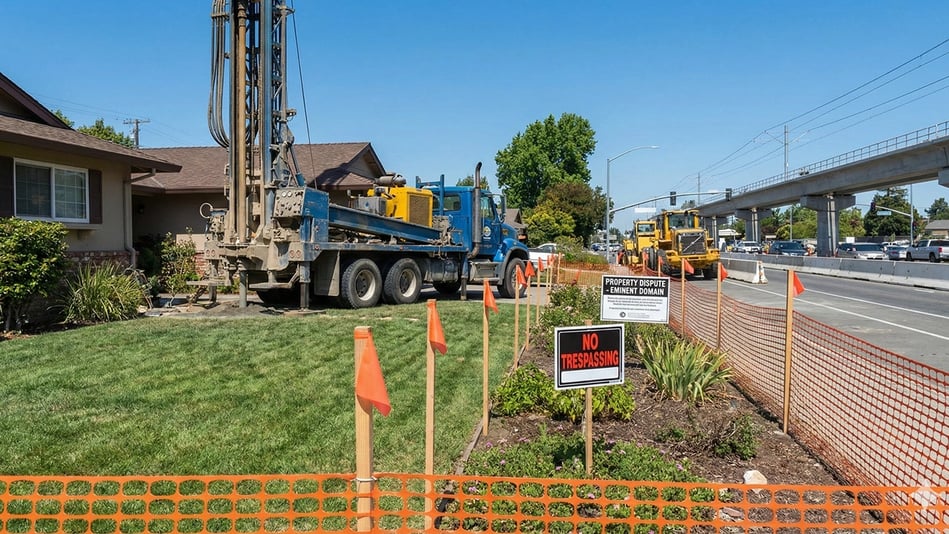
Table of Contents
Case Background
This lawsuit is grounded in an eminent domain action filed on June 30, 2023, by the Santa Clara Valley Transportation Authority (VTA) to invoke its power to seize private property for public use. The case arose from the Authority's need to acquire specific interests in a property owned by Aiguo Wu, specifically a fee simple interest in the land, permanent utility easements, and temporary construction easements to facilitate a transportation project. The central legal conflict did not concern the validity of the taking itself, but rather the calculation of "just compensation" owed to the Defendant as of the August 7, 2023, date of value. Consequently, the trial focused on establishing the fair market value of the acquired interests, quantifying the "severance damages" that reduced the value of Wu's remaining land, and determining if the landowner was entitled to additional reimbursement for a replacement water well beyond the amount the Authority had already paid.
Cause
The cause of this case lies in an Eminent Domain action initiated by the Santa Clara Valley Transportation Authority (VTA) to secure private property for a public infrastructure project. On June 30, 2023, the Authority filed a complaint to exercise its legal power to condemn portions of Aiguo Wu's property. The lawsuit was necessary because the Authority required specific property interests—including full ownership of a parcel (fee acquisition), permanent utility easements, and temporary construction easements—to proceed with its transportation improvements. The legal proceedings focused on establishing the "just compensation" the government was constitutionally required to pay the landowner for these acquisitions, as well as for the severance damages to the remaining land and the costs associated with replacing a water well impacted by the construction.
Injury
The acquisition directly affected the property interests of Aiguo Wu, the landowner. The Authority required total ownership—legally known as a fee acquisition—of a portion of Wu's land. Beyond simply taking a piece of the property, the project necessitated specific rights to use other parts of the land. This included utility easements, which granted the Authority permanent access for infrastructure, and two temporary construction easements that allowed them to occupy space during the building phase. The project also physically impacted the land's infrastructure, specifically requiring the replacement of a water well. Furthermore, the partial taking of the land caused "severance damages," meaning the project negatively impacted the value and utility of the remaining property that Wu retained.
Damages Sought
The core objective of the litigation focused on quantifying the financial compensation owed to Aiguo Wu. The legal teams sought to establish the fair market value for the land permanently acquired and the specific easements. A major point of contention involved the severance damages, where the defense sought compensation for the reduced value of the remaining parcel caused by the Authority’s project. Additionally, a specific financial dispute arose regarding the water well; while the Authority had already contributed funds for its replacement, the landowner sought additional compensation, arguing that the initial amount did not cover the actual costs incurred due to the project.
Key Arguments and Proceedings
Legal Representation
Plaintiff(s): Santa Clara Valley Transportation Authority.
· Counsel for Plaintiff(s): Evelynn Tran | Shannon Smyth-Mendoza | Robin Lynn Thornton
· Experts for Plaintiff(s): Terry Larson | Karsten Adam
Defendant(s): Aiguo Wu | Mortgage Electric Registration Systems, Inc. (solely as nominee for Bofi Federal Bank) | persons unknown claiming any title or interest in the property.
· Counsel for Defendant(s): Gerry Houlihan | Bobby B Ashrafi
Key Arguments or Remarks by Counsel
Claims
The Santa Clara Valley Transportation Authority approached the trial with the position that they had followed proper legal procedures for the acquisition. They maintained that they had already addressed specific issues, such as the water well replacement. The Authority noted that they had previously paid or agreed to pay Aiguo Wu the sum of $177,650 specifically toward the cost of the replacement well. Their arguments throughout the proceedings likely centered on the assertion that their appraisal values represented the true fair market value of the property and that the severance damages claimed by the Defendant were either overstated or adequately mitigated by the project's design.
Defense
The defense, representing Aiguo Wu, challenged the Authority's valuation and the sufficiency of the compensation offered. A central pillar of their argument was that the government's project caused significant damage to the property that remained after the taking. They argued that the "severance damages" the loss in value to the remainder of the land were substantial and required higher compensation than the Authority initially offered. Additionally, the defense contested the adequacy of the funds provided for the well. They claimed that the $177,650 was insufficient to cover the full costs mandated by the necessary work, thereby entitling the landowner to further reimbursement to be made whole.
Jury Verdict
The trial concluded with a formal verdict filed on October 24, 2025, in the Superior Court of California, County of Santa Clara. The jury provided a detailed breakdown of the compensation owed to Aiguo Wu, rejecting the notion that the initial offers were sufficient in all categories.
Fee Acquisition and Easements The jury first addressed the value of the land permanently taken by the Authority. They determined that the fair market value for the fee acquisition was $551,600 as of the date of value. Regarding the specific rights to use the land, the jury awarded $32,156 for the utility easements. For the temporary inconvenience and use of the land during the construction phase, the jury granted the Defendant $24,931 for the two temporary construction easements.
Severance Damages A significant portion of the total award compensated the landowner for the impact on the remaining property. The jury calculated the total severance damages resulting from the Authority's acquisitions and the project to be $668,440. This substantial figure indicated that the jury agreed with the defense's argument that the project had a major negative effect on the value of the land left to Wu.
Well Replacement Costs Finally, the jury resolved the specific dispute regarding the water well. They considered the fact that the Authority had already contributed $177,650. When asked if Aiguo Wu was entitled to receive any additional compensation for costs related to the well, the jury answered "YES". Consequently, they awarded an additional $170,076 for the replacement well costs.
Conclusion This verdict represented a comprehensive victory for the landowner's claims regarding value. By securing over half a million dollars for the land, nearly $670,000 in damages to the remainder, and significant additional funds for the well, the jury ensured that the compensation reflected the full scope of the financial impact caused by the public project.
Court Documents