Savalli v. People’s Trust: Florida Bad Faith Jury Verdict

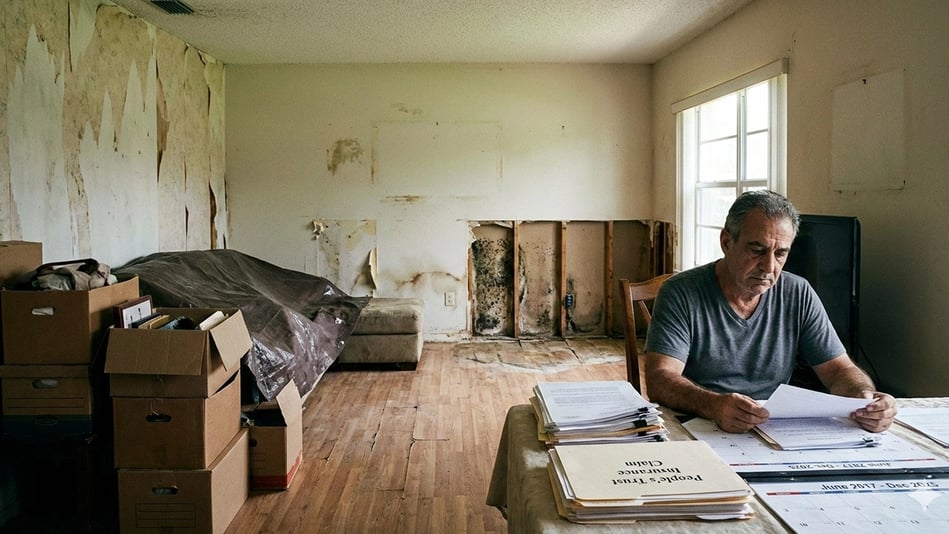
Table of Contents
The Origin of the Conflict
The legal conflict began with a sudden plumbing failure at the home of Frank and Barbara Savalli. On June 6, 2017, water escaped from the home's internal systems and flooded various areas of their residence in Coral Springs, Florida. Before this incident occurred, the Savallis had maintained their property in good condition and kept an "all-risk" insurance policy with People’s Trust Insurance Company to protect against such accidents. The homeowners promptly notified the insurance company about the leak, expecting the insurer to cover the cost of restoration. However, the company disagreed with the Savallis regarding the necessary repairs, which set the stage for a years-long dispute over the meaning of the insurance contract.
Injury
The water leak caused immediate and extensive physical injury to the property’s interior. Saturation ruined the flooring, seeped into the walls, and damaged personal belongings throughout the house. This physical destruction required a complete professional restoration to return the home to the state it was in before the pipes failed. Beyond the structural damage, the homeowners suffered a significant secondary injury in the form of economic hardship. Because the insurance company refused to pay the full amount required for repairs, the Savallis lived with a damaged home and mounting legal costs for over eight years. They argued that the insurer's delay and denial of a proper fix left them in a state of financial instability and emotional distress.
Damages Sought
When the Savallis first filed their lawsuit in September 2017, they requested compensation for the physical losses to their home and personal property. They asked the Court for an amount exceeding $15,000, which included the costs to repair the building and replace damaged items. As the case progressed into a bad faith claim, the focus shifted toward the financial harm caused by the company's conduct. The homeowners sought interest on the money the company should have paid years earlier, reimbursement for their extensive attorney fees, and the costs of bringing the case to trial. They essentially looked for the Court to make them whole again after the insurer failed to honor the terms of the insurance policy.
Key Arguments and Proceedings
Legal Representation
Plaintiff(s): Frank Savalli | Barbara Savalli
· Counsel for Plaintiff(s): Jeremy F. Tyler | W. Wyndham Geyer, Jr | Andrew Fuxa, | Hillary B. Cassel | Gilberto J Barreto | Kathleen M O'Brien
· Experts for Plaintiff(s): Robert J. Ray
Defendant(s): People’s Trust Insurance Company
· Counsel for Defendant(s): Joshua S. Beck | Katie Marie Nieves | Stephanie Seligman
· Experts for Defendant(s): Daniel Doucette
Key Arguments or Remarks by Counsel
The attorneys for the Savallis argued that People’s Trust manipulated the "Option to Repair" clause in the insurance policy to avoid paying for the full extent of the damage. They contended that while the company acknowledged the claim, it only offered to fix a small portion of what was actually broken. The legal team characterized this as a "low-ball" tactic intended to save the company money at the expense of the homeowners. They argued that once the company chose to repair the home instead of writing a check, it took on the responsibility to fix everything, a duty they claimed the insurer ignored.
In contrast, the counsel for People’s Trust argued that the company acted entirely within the rules of the insurance contract. They pointed out that the Savallis had received a discount on their premiums in exchange for allowing the company to use its own preferred contractors. The defense insisted that the disagreement over the "scope" of the repairs did not mean the company acted in bad faith. They argued that the Savallis were the ones who blocked the repair process by demanding more work than the policy actually covered.
Claims
The Savallis brought several specific legal claims against the insurer. First, they sued for Breach of Contract, alleging that People’s Trust failed to pay the benefits promised under the policy. They also requested a "Declaratory Judgment," which is a request for a judge to clarify the rights and obligations of both parties under the insurance agreement. Finally, they pursued a claim for Breach of an Implied Contract of Repair. They argued that when the company exercised its right to repair the home, it created a new legal obligation to restore the property to its pre-loss condition, an obligation the company subsequently broke.
Defense
The insurance company presented several affirmative defenses to justify its refusal to pay the full claim. They argued that the Savallis failed to comply with the policy’s requirements and that the legal notice filed by the homeowners was "defective" under Florida law. The defense also claimed that the situation was complicated by a separate insurance claim for damage caused by Hurricane Irma later in 2017. They suggested that because an "appraisal" process had lumped both the water leak and the hurricane damage together, it was impossible to determine exactly how much the company owed for the original water claim.
Jury Verdict
The trial concluded on December 18, 2025, when the jury reached a unanimous decision regarding the conduct of People’s Trust Insurance Company. The jurors carefully considered the evidence from the eight-year history of the claim and found that the company had violated multiple sections of the Florida Insurance Code.
The jury specifically ruled that People’s Trust did not attempt in good faith to settle the claim. They decided that the company failed to act fairly and honestly toward the Savallis. Furthermore, the verdict stated that the insurance company purposefully made misrepresentations to the homeowners to settle the claim for less than it was worth. The jurors also found that the company failed to implement proper standards for investigating claims and did not respond to the Savallis' communications in a timely manner.
By answering "Yes" to every question on the verdict form, the jury confirmed that the insurance company’s actions directly caused financial damage to the homeowners. The foreperson, Charles Montalto, signed the final verdict, which the Court officially filed the following day. This decision ended the long-standing dispute by holding the insurer accountable for its "bad faith" handling of a routine water damage claim.
Court Documents