San Francisco Scooter Crash: Dangerous Road Verdict
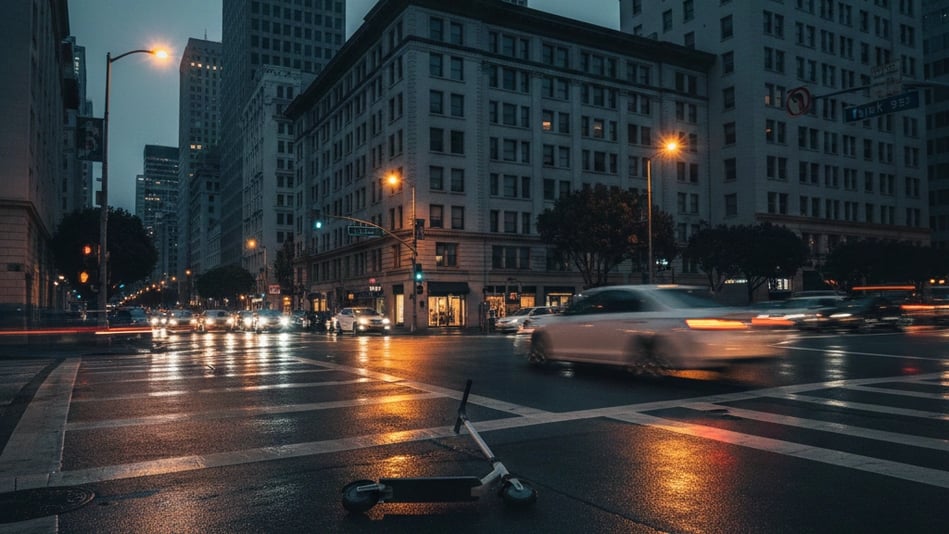
Table of Contents
Case Background
On September 19, 2021, a serious accident occurred at the intersection of Taylor Street and Turk Street in San Francisco. Melinda Desiree Harris was traveling on an electric scooter when a vehicle struck her. Gresha Monae Brown operated the vehicle involved in the collision.
Cause
The crash happened because of a combination of driver negligence and unsafe roadway conditions. Harris claimed that Brown failed to operate her vehicle safely. Additionally, Harris alleged that the City and County of San Francisco maintained the intersection in a dangerous state. She pointed to several issues, including poor roadway markings, inadequate lighting, and a lack of recovery space for drivers.
Injury
Harris suffered severe physical injuries to her body during the collision. These injuries required significant medical care and treatment immediately following the incident. She also experienced substantial physical pain, mental suffering, and emotional distress.
Damages Sought
Harris sought several types of compensation for her losses. She requested general damages for her pain and suffering. She also asked for special damages to cover her past and future medical expenses and her lost earnings.
Key Arguments and Proceedings
The legal battle began when Harris filed her complaint in August 2022. The case moved through the discovery phase where both sides gathered evidence. The City of San Francisco filed its formal response in October 2022, denying all liability. The trial eventually took place in late 2025, culminating in a jury verdict in December of that year.
Legal Representation
Plaintiff(s): Melinda Desiree Harris.
· Counsel for Plaintiff(s): Harry Nalbandyan | Gerardo Moreno Jr.
· Experts for Plaintiff(s): Arthur Kowell | Marcel Ponton | Bong J. Walsh
Defendant(s): Gresha Monae Brown and the City and County of San Francisco.
· Counsel for Defendant(s): David Chiu | Meredith B. Osborn | David A. Delbon | Katherine B. Bearman | David August Delbon | Steven F. Egler | Christina E. Kim | Samuel A. Leff | Steven A Mills
· Experts for Defendant(s): James Y. Soong | Catherine Marreiro | Daniel M. Desautels | Craig Brozinsky | Kevan Shafizadeh
Claims
Harris argued that the City of San Francisco was responsible because it owned and controlled the intersection. She contended that the property was in a dangerous condition at the time of the accident. Her legal team argued that the city had notice of these dangers long enough to have fixed them before she was hurt.
Defense
The City of San Francisco denied that the intersection was dangerous. They argued that the roadway met all safety standards and that the accident resulted solely from the negligence of the involved parties. The city also claimed immunity under the California Tort Claims Act.
Jury Verdict
The jury reached a decision on December 4, 2025. They first determined that the City and County of San Francisco owned or controlled the property where the incident occurred. Crucially, the jury found that the property was indeed in a dangerous condition at the time Harris was injured.
The jurors concluded that this dangerous condition created a foreseeable risk of the kind of accident that happened to Harris. However, the legal proceedings ended there regarding the city's liability because the jury did not find that the dangerous condition was a substantial factor in causing Harris's specific harm. Consequently, the jury did not award any damages against the city.