Miami-Dade Jury Awards $102k for Red Light Collision Injury

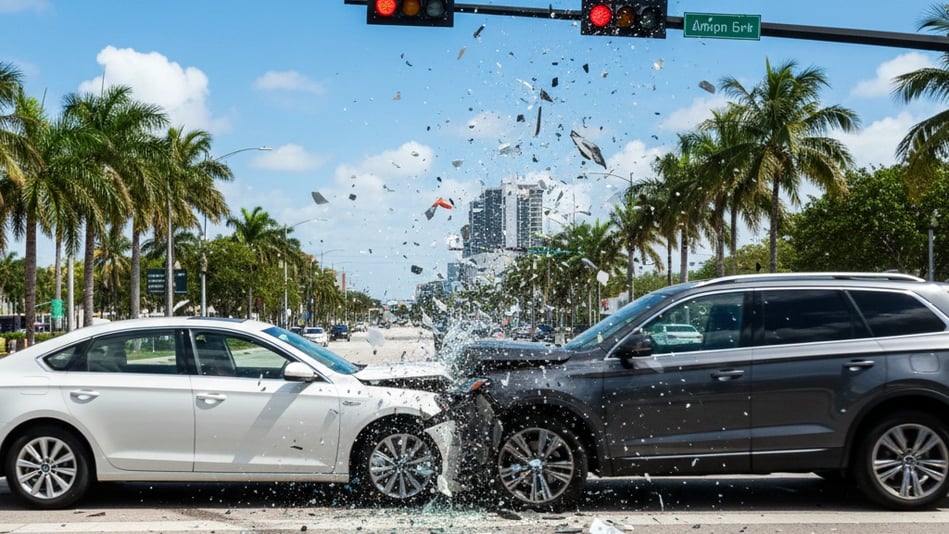
Table of Contents
Case Background
This legal dispute began following a motor vehicle collision in Miami-Dade County that forever altered the daily life of Felicia Williams. On January 7, 2022, Williams traveled through the intersection of NW 67th Avenue and NW 167th Street. At that same moment, Mildred Laseca operated her own vehicle in the same vicinity. The routine drive turned into a Courtroom battle when Laseca’s vehicle struck the side of the car Williams drove.
Cause
The core of the dispute centered on a traffic violation at a busy Florida intersection. Williams alleged that Laseca failed to abide by the traffic signals and ignored a red light. Because Laseca did not stop, she drove her vehicle directly into the path of Williams, resulting in a side-impact collision. Williams maintained throughout the proceedings that Laseca breached her fundamental duty to operate her motor vehicle with proper care on public highways.
Injury
The impact of the crash left Williams with a variety of physical and emotional burdens. She reported suffering bodily injuries that led to ongoing pain and mental anguish. Beyond the immediate physical trauma, Williams claimed the accident caused a loss of capacity for the enjoyment of life and left her with a permanent disability. She also noted that the collision aggravated a physical condition she had dealt with prior to the accident.
Damages Sought
Williams sought a legal remedy for the financial and personal toll the accident took on her. Her initial complaint requested damages exceeding $30,000 to cover the costs of her hospitalization, medical nursing care, and treatment. Additionally, she looked for compensation regarding her lost earnings and the future loss of her ability to earn money. She demanded a jury trial to determine the full extent of the compensation owed for her suffering and financial setbacks.
Key Arguments and Proceedings
The litigation moved through the Miami-Dade County Circuit Court system for three years as both sides prepared their arguments. The proceedings involved a rigorous examination of the moments leading up to the crash and the medical aftermath that Williams faced.
Legal Representation
Plaintiff(s): Felicia Williams
Counsel for Plaintiff(s): Joseph R. Dawson
Defendant(s): Mildred Laseca
Counsel for Defendant(s): Jonathan G. Liss | Douglas de Almeida
Key Arguments or Remarks by Counsel
The legal teams presented two starkly different versions of the events that occurred on that January afternoon.
Claims
The attorney for Williams argued that the fault rested entirely with Laseca. They presented evidence to show that the red light had been clearly visible and that Laseca’s failure to stop was the sole reason for the collision. Counsel emphasized that the negligence displayed by the Defendant directly caused the injuries and long-term suffering Williams endured. They argued that the medical expenses and the impact on Williams's quality of life required a significant financial award.
Defense
Laseca’s defense team fired back with several affirmative defenses, attempting to shift the blame or at least reduce the potential payout. They argued that Williams herself acted in a careless and negligent manner. A major point of their defense focused on the seat belt defense, where they claimed Williams failed to use an available and operational seat belt. They argued this failure was unreasonable and was the actual cause of the injuries she sustained. Furthermore, the defense suggested the accident occurred due to the actions of third parties or conditions beyond Laseca’s control. They also asserted that Williams failed to mitigate her damages and did not meet the specific requirements set by the Florida Reparations Reform Act.
Jury Verdict
After hearing the evidence presented during the trial, the jury deliberated to reach a unanimous decision on in 31st October 2025.
Finding of Negligence
The jury first addressed whether Laseca had been negligent. They decided that the negligence on the part of Mildred Laseca was indeed a legal cause of the loss, injury, and damage sustained by Felicia Williams.
Assessment of Injuries
A critical turning point in the verdict involved the question of permanency. When asked if Williams had sustained a permanent injury within a reasonable degree of medical probability, the jury answered "NO". This decision meant that Williams would not be eligible for certain types of future non-economic damages, such as future pain and suffering.
Financial Award
The jury moved on to calculate the specific financial losses Williams had incurred up to the date of the trial. They awarded $40,000 for reasonable and necessary medical expenses that Williams had paid in the past. Additionally, the jury awarded $62,000 to compensate for the earnings Williams had lost in the past because of the accident.
The jury did not award any funds for future medical expenses or future lost earnings. They also provided no compensation for pain and suffering, physical impairment, or mental anguish, as those were tied to the finding of a permanent injury, which the jury had rejected.
Final Judgment
On December 10, 2025, Judge Migna Sanchez-Llorens finalized the jury's findings. The Court entered a final judgment in favor of Felicia Williams. The Court ordered Mildred Laseca to pay Williams the total sum of $102,000. This amount represented the combined total of the past medical costs and past lost wages identified by the jury. The judgment also specified that the amount would bear interest at the statutory rate until paid in full. With this order, the Court closed the case as to all parties.