Jury Rejects Product Defect Claim in Highway Crash Case

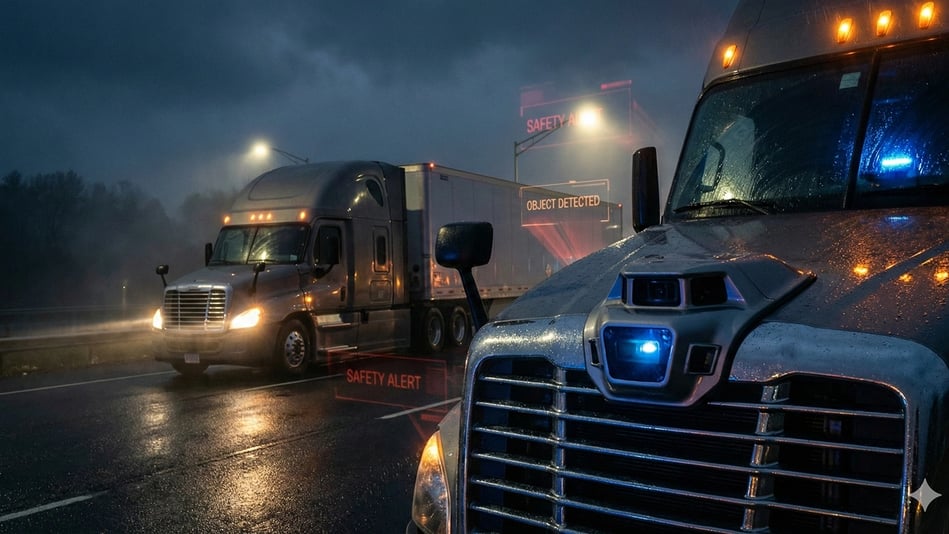
Table of Contents
Case Background
This legal battle began after a devastating highway collision on April 22, 2016, around 4:00 a.m. Schley M. Hunter traveled as a passenger in a 2014 Hino box truck driven by a coworker, Howard Dozier, on Route 8 North in Waterbury, Connecticut. Their vehicle veered onto the shoulder, struck a large rock, and rolled onto its side, coming to rest across the northbound lanes.
Shortly after the initial crash, Larry Lee Shunk approached the scene while driving a 2016 Freightliner tractor-trailer. Shunk later claimed he could not see the overturned box truck blocking the road until it was too late. The heavy Freightliner slammed into the stationary Hino while Mr. Hunter remained trapped inside the cab.
Cause
The Plaintiffs alleged that the 2016 Freightliner was defective and unreasonably dangerous because it lacked critical safety technology. They specifically argued that the truck’s headlight system provided insufficient illumination and that the vehicle lacked an automatic high-beam system or collision-avoidance technology. The complaint stated that Shunk received no warning from the truck’s systems before the impact.
Injury
The second collision inflicted catastrophic and permanent injuries on Schley Hunter. He suffered traumatic burst fractures of his C1 and C5 vertebrae, which required emergency surgery. These injuries resulted in a spinal cord contusion, paralysis, and quadriplegia. Additionally, he sustained traumatic brain damage, a myocardial contusion, a collapsed lung, and injuries to his chest, spine, and spleen.
Damages Sought
The Hunters sought compensation for extensive past and future medical expenses, including around-the-clock attendant care, specialized housing, and rehabilitation. Schley Hunter claimed total destruction of his earning capacity and severe physical and emotional pain. Monica Hunter also filed a claim for loss of consortium, citing the loss of her husband's companionship and support.
Key Arguments and Proceedings
Legal Representation
Plaintiff(s): Schley M. Hunter | Monica R. Hunter
Counsel for Plaintiff(s): Joram Hirsch, Esq. | Larry E. Coben, Esq. | Jo Ann Niemi, Esq.
Experts for Plaintiff(s): Timothy J. Reust | Peter Leiss | Shawn Harrington | David E. Peck | William J. Vigilante | John E. Dolce | Ron Fijalkowski | Alex Karras | Guy William Fried | Andrew C. Verzilli
Defendant(s): Daimler Trucks North America, LLC (DTNA) | Daimler Trucks North America Corporation | Freightliner LLC | GLS Leasco, Inc.
Counsel for Defendant(s): James J. Healy | Anthony Joseph Sbarra Jr | Brian Matthew Gibbons
Experts for Defendant(s): Robert J. Butler | Michelle Kuykendal | Eldon Leaphart | David Cades | Joseph Cormier
Key Arguments or Remarks by Counsel
Claims
The Plaintiffs’ legal team argued that Daimler Trucks North America (DTNA) prioritized profits over safety by failing to make modern collision-avoidance systems standard equipment on its 2016 models. They contended that the truck was defective because it did not include "haptic" or "auditory" alerts that would have warned the driver of the obstacle ahead. Counsel further argued that DTNA failed to warn buyers about the limitations of the truck's headlight system.
Defense
DTNA denied that the 2016 Freightliner was defective. While the company admitted to designing and selling the vehicle, it argued that the truck met all applicable safety standards at the time of manufacture. The defense maintained that the collision resulted from the circumstances of the road and the actions of the drivers involved rather than a failure of the vehicle's design.
Jury Verdict
The trial concluded in the Superior Court for the Judicial District of Waterbury. After deliberating on the evidence regarding product liability and negligence, the jury reached its decision on December 17, 2025.
The jury found in favor of the Defendant, Daimler Truck North America, LLC, and against the Plaintiffs, Schley M. Hunter and Monica R. Hunter. The verdict form, signed by Jury Foreperson Theodore Peister, indicated that the jury did not find the truck manufacturer liable for the injuries sustained in the crash.