Hickey v. Harrington: $12M Bike Crash Verdict
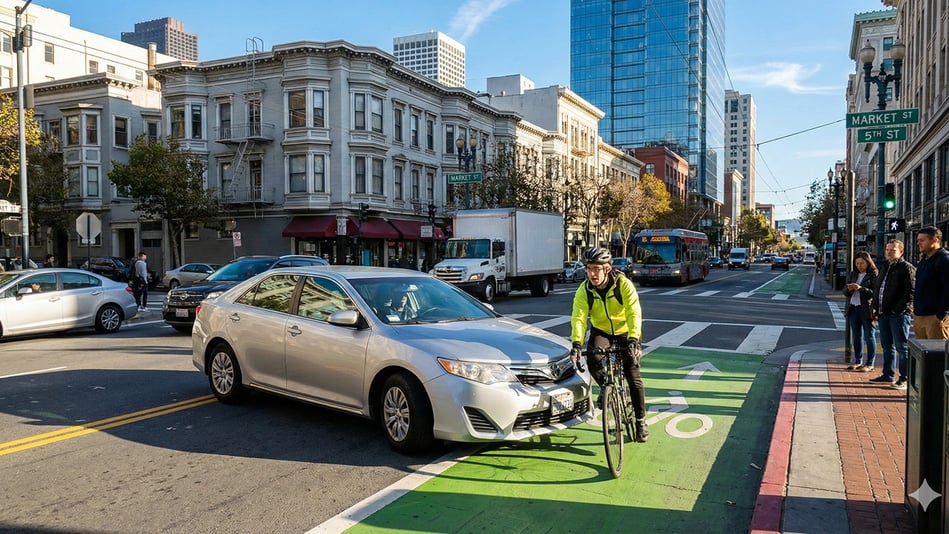
Table of Contents
Case Background
This legal action was initiated in the Superior Court of the State of California, County of San Francisco, regarding a civil dispute between Leah Hickey and Rebecca Harrington. The proceedings began formally on May 5, 2023, when the Plaintiff filed a complaint alleging negligence stemming from a traffic incident that occurred nearly two years prior, on June 30, 2021. The incident took place in San Francisco at 2355 Post Street, involving a collision between the Plaintiff's bicycle and the Defendant's motor vehicle.
Following the initial filing, the Defendant, Rebecca Harrington, submitted an answer to the complaint on January 12, 2024, denying the allegations and asserting several affirmative defenses, including comparative negligence. The litigation process continued through the San Francisco Court system under Case Number CGC-23-606326 until it concluded with a jury verdict filed on December 8, 2025.
Cause
According to the complaint filed by the Plaintiff, Ms. Harrington suddenly initiated a left-hand turn into the parking lot. This maneuver placed her vehicle directly in the path of the oncoming cyclist. The Plaintiff alleged that the Defendant failed to ensure the roadway was clear, did not use a turn signal, and failed to yield the right of way before turning. Ms. Hickey attempted to stop but could not avoid the collision. She struck the Defendant's vehicle and fell to the ground. The Plaintiff asserted that this sequence of events constituted negligence, as the driver violated provisions of the California Vehicle Code regarding right-of-way and safe turning procedures.
Injury
The collision resulted in immediate and severe consequences for Ms. Hickey. Upon striking the vehicle and falling to the roadway, she sustained serious physical injuries. The initial filing described these injuries as "shock and injury to the body, nervous system, and person." The Plaintiff further alleged that the incident caused her great mental, physical, and nervous pain and suffering.
Beyond the immediate trauma, the Plaintiff claimed that the injuries led to permanent physical and mental disability. The severity of the harm prevented her from fully participating in her usual gainful activities, leading to a significant disruption in her professional and personal life. The precise nature of these medical issues became a central point of evaluation during the trial, as evidenced by the substantial sums later awarded for both past and future non-economic losses.
Damages Sought
In her lawsuit, Ms. Hickey sought comprehensive financial compensation to cover the various losses she incurred due to the accident. She demanded general damages to compensate for the pain, suffering, and reduced quality of life she experienced. Additionally, she sought special damages to cover medical bills and related expenses that accumulated following the injury.
The Plaintiff also requested compensation for the damage to her personal property, specifically her bicycle, which required repair or replacement. The complaint included a request for compensation regarding the loss of use of that property. While the initial complaint did not specify a total dollar amount, stating instead that the amounts were to be determined at trial according to proof, the Plaintiff maintained that the damages exceeded the jurisdictional minimum of the Court.
Key Arguments and Proceedings
Legal Representation
Plaintiff(s): Leah Hickey
· Counsel for Plaintiff(s): Michael Stephenson | Theodore Chase
Defendant(s): Rebecca Harrington
· Counsel for Defendant(s): Nolan S. Armstrong | Mona L. Bauer
· Joint Expert Witness: Zdravko Salipur | Murray Solomon | Maria Isabel Brady | Karl Erik Volk | David Seidenwurm | Carla Huff Kelley | Santi Rao
Key Arguments or Remarks by Counsel
Claims
The legal team for Ms. Hickey built their case on the theory of negligence per se. They argued that Ms. Harrington owed a duty of care to share the road safely and violated specific sections of the California Vehicle Code designed to protect cyclists and other road users. The Plaintiff's counsel contended that the Defendant operated her vehicle in a dangerous manner by failing to keep a proper lookout and making an unsafe turn across traffic. They asserted that this violation of statutory law directly caused the collision.
Furthermore, the Plaintiff's attorneys argued that the resulting harm went beyond mere property damage. They emphasized the long-term impact of the injuries on Ms. Hickey's ability to earn a living and enjoy her life. By presenting the crash as an avoidable incident caused solely by the driver's recklessness, they sought to establish full liability on the part of Ms. Harrington.
Defense
In response, the defense team for Ms. Harrington formally denied all allegations of negligence. Filed in January 2024, their answer to the complaint challenged the Plaintiff's account of the events. They asserted that Ms. Harrington acted with reasonable care and that no act or omission on her part caused the alleged injuries.
A central pillar of the defense strategy involved the doctrine of comparative negligence. The defense attorneys argued that Ms. Hickey bore responsibility for the accident due to her own careless or reckless conduct. They claimed she failed to maintain her bicycle properly or operated it largely in a way that contributed to the incident. They also raised the affirmative defense that the Plaintiff failed to mitigate her damages, suggesting that the financial and physical fallout could have been reduced had she taken different actions following the accident. The defense sought to bar recovery entirely or, alternatively, to reduce any financial award in proportion to the Plaintiff's percentage of fault.
Jury Verdict
The case proceeded to a jury trial in the Superior Court of California, County of San Francisco, concluding in 8th December 2025. The jury returned a detailed verdict that addressed liability, causation, and damages, ultimately assigning fault to both parties involved.
Determination of Negligence
The jurors first deliberated on the conduct of the Defendant. They unanimously found that Rebecca Harrington acted negligently. Furthermore, they determined that her negligence served as a substantial factor in causing harm to Leah Hickey. This finding established the primary liability of the driver for the collision.
Calculation of Damages
After establishing liability, the jury assessed the total damages suffered by the Plaintiff. The financial award reflected the severe and long-lasting nature of the injuries described during the proceedings. The jury broke down the compensation as follows:
For economic losses, the jury awarded $871,224 for past wage loss, acknowledging the income Ms. Hickey lost between the accident and the trial. They also looked ahead, awarding a substantial $3,581,245 for future loss of earnings, indicating a determination that her injuries would permanently impair her earning capacity.
For non-economic losses, which cover physical pain, mental suffering, and loss of enjoyment of life, the jury awarded $1,168,000 for past suffering. Recognizing the lifelong impact of the trauma, they awarded an even larger sum of $6,482,400 for future non-economic losses.
The total damages calculated by the jury amounted to $12,102,869.
Comparative Fault and Apportionment
While the jury found the Defendant negligent, they also accepted the defense's argument regarding comparative fault. The verdict form indicated that the jury found Ms. Hickey negligent as well, and that her negligence was a substantial factor in causing her own harm.
Consequently, the jury was required to assign a percentage of responsibility to each party. They attributed 70% of the responsibility for the accident to the Defendant, Rebecca Harrington. They assigned the remaining 30% of the responsibility to the Plaintiff, Leah Hickey.
Under California's comparative negligence laws, this apportionment means Ms. Hickey's total recoverable damages would likely be reduced by her 30% share of the fault. While the gross verdict stood at over $12 million, the final judgment entered against the Defendant would reflect this deduction, holding Ms. Harrington liable for 70% of the total assessed damages.
Court Documents