$6.3M Settlement: Bitech Technologies v. Cao Fraud Case

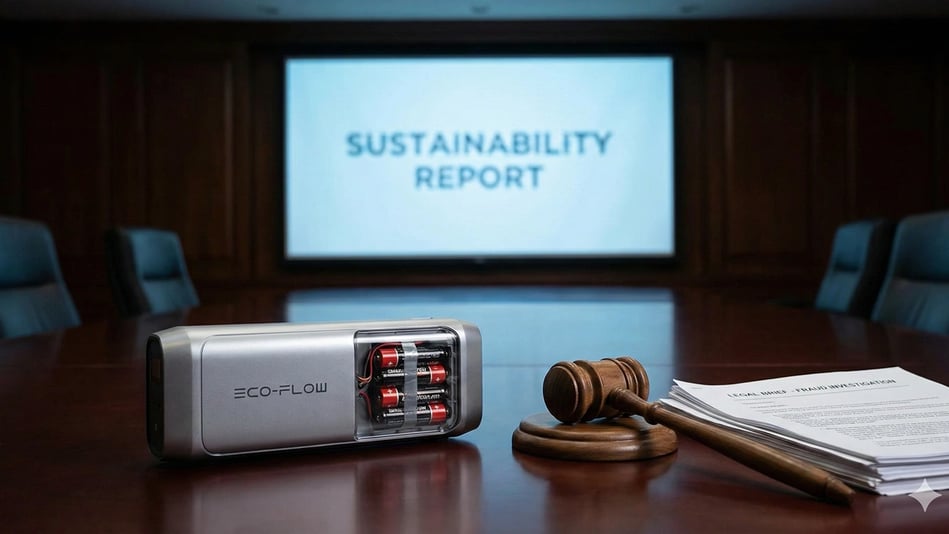
Table of Contents
Case Background
The dispute originated from a high-stakes agreement involving revolutionary green energy technology. Bitech Technologies Corporation, a publicly traded company focused on green energy solutions and the "Evirontek Integrated Platform," sought to expand its portfolio in the cryptocurrency mining sector. In late 2020, Michael Cao and his brother Calvin Cao approached the company with a proposition that promised to reshape the energy landscape. The Caos claimed to control a proprietary innovation known as the "Tesdison" technology, which they marketed through their company, SuperGreen Energy Corporation.
Michael Cao presented himself as an expert in cryptocurrency mining and blockchain. He marketed the Tesdison system as a modular battery-powered generator capable of producing 40 percent more energy than its battery capacity. The pitch included claims that the system operated completely off-grid without utility connections and delivered perpetual energy 24 hours a day. Relying on these representations, Bitech entered into a Patent and Technology License Agreement in January 2021. The agreement granted Bitech exclusive rights to use the Tesdison technology within the cryptocurrency mining industry. In exchange, the company issued millions of shares of stock and provided monthly salaries to Michael Cao, his family members, and associates to serve as consultants and board members.
Cause
Allegations of Deceit and Failure to Deliver Bitech Technologies Corporation initiated legal action after realizing the technology did not function as advertised. The company alleged that the Defendants engaged in fraud by concealment, breach of contract, and breach of fiduciary duty. The core of the complaint centered on the accusation that the Tesdison technology was nowhere near commercial viability, despite the Defendants' assurances. Bitech claimed the Defendants used the partnership not to develop the technology, but to siphon corporate funds and accumulate stock.
Breach of Trust and Fiduciary Duty The lawsuit outlined how Michael Cao, while serving as a director and consultant, allegedly withdrew corporate funds for personal use without authorization. The complaint detailed specific instances where Cao used company credit cards for personal expenses and withdrew cash directly from Bitech accounts. Furthermore, Bitech discovered that while the Defendants were on the payroll to develop the technology exclusively for Bitech, they continued to solicit licensing deals from other unaffiliated companies in the cryptocurrency space.
Injury
Financial and Reputational Loss The Plaintiffs suffered significant financial setbacks. Bitech issued over 180 million shares of common stock to the Defendants based on false pretenses. Specifically, B & B Investment Holding LLC, an entity controlled by Michael Cao, held over 128 million shares, while his wife, Linh Dao, held over 51 million shares. In addition to stock dilution, the company paid substantial monthly salaries $6,000 to Michael Cao and $3,500 to Calvin Cao and incurred losses exceeding $172,000 in unauthorized cash withdrawals and personal expenses charged to corporate accounts.
Operational Stagnation Beyond direct monetary loss, Bitech alleged severe operational damage. The company invested in high-end Ethereum mining rigs and expensive batteries to support the development of the Tesdison system. They hired a Chief Technology Officer and a national battery expert to assist the Caos. However, the lack of a functional product wasted these resources and delayed Bitech’s entry into the market, resulting in lost corporate opportunities and damage to the company's reputation and goodwill.
Damages Sought
Restitution and Penalties Bitech Technologies Corporation sought a comprehensive recovery of assets and damages. The Plaintiff demanded the return of all 180,277,121 shares of stock issued to the Defendants. They requested a judgment for actual damages proven at trial and punitive damages to punish the Defendants for willful and malicious conduct.
Treble Damages under Penal Code Citing California Penal Code Section 496, which addresses receiving stolen property and theft, Bitech requested treble damages—three times the amount of actual damages suffered. The complaint estimated these damages to be no less than $78,000,000. This figure reflected the severity of the alleged theft of corporate funds and stock.
Key Arguments and Proceedings
The Discovery of the Deception The turning point in the relationship occurred in late 2022. Growing suspicious of the lack of progress, Bitech demanded a demonstration of the technology. The inspection revealed that the Tesdison battery could not generate power independently. Bitech discovered that the prototype shown to them was actually powered by a concealed set of standard batteries hidden at the bottom of the system. This revelation directly contradicted the Defendants' claims that the system ran on a unique combination of flywheel and battery technology.
Internal Investigation and Termination Following the failed demonstration, Bitech launched an internal investigation. They found that Michael Cao had overstated his expertise and that the Defendants likely never intended to commercialize the product. The investigation uncovered the unauthorized financial withdrawals. Consequently, the Board of Directors voted to terminate Michael Cao and remove him as an authorized signatory in December 2022. Michael Cao subsequently resigned from the board, and the company terminated the consulting agreements with the other Defendants.
Legal Representation
Plaintiff(s): Bitech Technologies Corporation, a Delaware corporation headquartered in Newport Beach, California.
· Counsel for Plaintiff(s): Darrell P. White | Michelle E. Soon | Maxx E. Sharp
Defendant(s): Michael Cao | B & B Investment Holding LLC | Linh Dao | Cory Thomason.
· Counsel for Defendant(s): Not Mentioned
Key Arguments or Remarks by Counsel
The Plaintiff’s Position on Fraud
Counsel for Bitech argued that the entire business relationship was predicated on a lie. They emphasized that the Defendants knowingly misrepresented the readiness of the Tesdison technology to induce Bitech into signing the License Agreement. The attorneys pointed to the concealed batteries in the prototype as undeniable evidence of intent to deceive. They argued that the Defendants treated Bitech’s corporate accounts as a personal piggy bank, disregarding all fiduciary duties owed to the shareholders.
The Plaintiff’s Position on Conversion The legal team highlighted the sheer volume of stock and money transferred to the Defendants. They argued that because the shares and funds were obtained through fraud and breach of contract, the retention of these assets constituted conversion. The application of California Penal Code §496 was a central legal strategy, allowing the Plaintiff to seek triple the value of the misappropriated property due to the theft-like nature of the Defendants' actions.
Claims
Fraud and Concealment Bitech claimed that the Defendants intentionally hid the fact that the Tesdison technology was not functional and was years behind schedule. They alleged the Defendants never intended to develop a commercially viable product but used the partnership solely for financial gain.
Breach of Contract The Plaintiff asserted that the Defendants violated the License Agreement by failing to deliver a product compliant with ISO standards by the agreed December 2022 deadline. Additionally, the Defendants breached the exclusivity clause by soliciting licensing deals from other companies.
Breach of Fiduciary Duty Bitech argued that Michael Cao and his associates owed a duty of loyalty and good faith to the company. By stealing funds, self-dealing, and working against the company's interests, they violated these fundamental legal obligations.
Defense
Procedural Context and Default The complaint noted that prior to this state Court filing, Bitech had filed a federal suit. In that action, a default was entered against Defendant B & B Investment Holding LLC, suggesting a failure to respond or defend against the allegations in that venue. The federal suit was dismissed without prejudice due to jurisdiction issues, leading to this state filing. The complaint does not detail specific defensive arguments offered by Michael Cao or the other Defendants, as the document focuses on the Plaintiff's allegations. However, the narrative implies the Defendants previously attempted to maintain the facade of the technology's viability until the inspection revealed the truth.
Settlement
Resolution of the Dispute The litigation brought by Bitech Technologies Corporation against Michael Cao and his associates concluded without a jury rendering a final verdict on the facts. Instead, the parties reached a negotiated resolution to end the legal battle.
Settlement Terms The case resulted in a settlement requiring the payment of $6,300,000. This substantial sum represented a recovery of damages for Bitech Technologies Corporation, addressing the financial losses incurred through the salaries, unauthorized withdrawals, and the value of the stock issued under the now-defunct agreements. The settlement effectively closed the chapter on the failed partnership and the controversy surrounding the Tesdison technology.
Court documents are available upon request at jurimatic@exlitem.com