$3.6M Verdict: LAPD Shot Filmmaker With Projectile

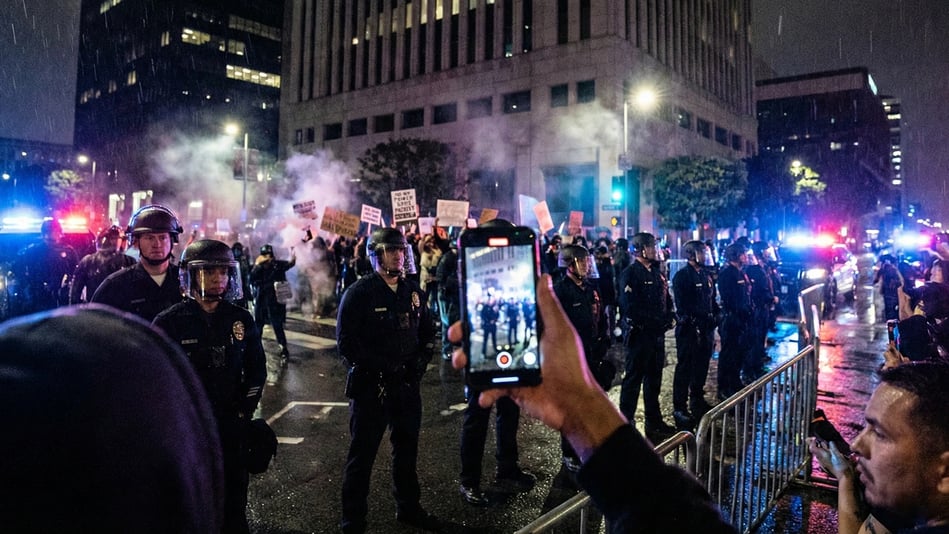
Table of Contents
Case Background
In the fall of 2020, Los Angeles saw a wave of public demonstrations and protests that drew thousands of citizens into the streets. On the night of October 19, 2020, A. Jamal Shakir, Jr. joined many others near the intersection of 5th Street and Flower Street in the heart of downtown. Shakir did not carry a weapon or a sign; instead, he held his cell phone. He intended to document the interactions between the Los Angeles Police Department and the crowds gathered in the area. As a citizen journalist and concerned individual, he believed that recording these moments served a vital public interest.
The atmosphere remained tense as police officers in tactical gear formed lines to manage the crowd. Shakir stood at a distance where he could clearly see the officers. He had started his recording and kept his camera focused on the police line when the situation took a violent turn. Without warning or a specific threat directed at him, an officer later identified as Eric Anderson raised a "less-lethal" projectile launcher. This weapon fired a 40mm foam baton or similar hard projectile designed to incapacitate people from a distance. The projectile streaked through the air and struck Shakir directly in the hand while he was still holding his phone to record the scene.
Cause
The cause of this legal action stemmed from the specific decision by Officer Eric Anderson to use force against a non-violent bystander. Shakir argued that the officer fired the projectile with the intent to stop him from filming or to punish him for his presence at the protest. Under California law and the United States Constitution, individuals possess a clearly established right to record police activity in public places. By targeting Shakir’s hand—the very limb holding the recording device—the officer effectively silenced a witness and used physical violence to do so. The lawsuit alleged that the City of Los Angeles failed to train its officers properly on the use of these projectile weapons, leading to an environment where peaceful protesters and observers faced unnecessary risks.
Injury
The impact of the high-velocity projectile caused immediate and devastating damage to Shakir’s hand. The force of the foam baton crushed several bones and tore through the soft tissue of his fingers and palm. Doctors at the emergency room discovered multiple fractures that required intensive surgical intervention to repair. Beyond the initial physical trauma, Shakir suffered from a significant loss of mobility and strength in his hand, which hindered his ability to perform daily tasks and continue his work. He also experienced deep psychological distress, including anxiety and a newfound fear of law enforcement, which stemmed directly from the shock of being shot while peacefully exercising his rights.
Damages Sought
Shakir filed his lawsuit seeking a wide range of financial compensation to address the various ways this incident upended his life. He requested "general damages" to cover the physical pain, suffering, and emotional trauma he endured since the night of the shooting. Additionally, he sought "special damages" for his mounting medical bills, including the costs of his surgery, hospital stays, and ongoing physical therapy. Because he alleged that Officer Anderson acted with malice or a conscious disregard for his safety, Shakir also asked the Court for punitive damages. These are meant to punish a Defendant for particularly bad behavior and to discourage others from acting the same way in the future.
Key Arguments and Proceedings
The litigation moved through the Los Angeles Superior Court over several years. During the pre-trial phase, the legal teams engaged in a process called "discovery," where they gathered evidence such as body-worn camera footage, police radio logs, and medical records. Shakir's attorneys argued that the evidence showed a clear pattern of excessive force. They maintained that Shakir was never a threat and that the officer had no legal justification to fire. The City of Los Angeles, however, attempted to frame the event as a chaotic and dangerous situation where officers had to make split-second decisions to maintain order.
Legal Representation
Plaintiff(s): A. Jamal Shakir, Jr.
· Counsel for Plaintiff(s): Carl E. Douglas | Jamon R. Hicks | Tiffany McLean | Bianca V. Perez
· Experts for Plaintiff(s): William Harmening
Defendant(s): City of Los Angeles | Officer Eric Anderson.
· Counsel for Defendant(s): Michael N. Feuer | Kathleen A. Kenealy | Scott Marcus | Cory M. Brente | Surekha A. Shepherd
· Experts for Defendant(s): Edward Flosi | Stuart Kuschner
Key Arguments or Remarks by Counsel
Counsel for Shakir opened the case by telling the jury that the camera does not lie. They argued that the officer’s decision to fire was a "message" sent to those who dared to hold the police accountable. They emphasized that a 40mm projectile is a dangerous weapon that can be lethal if it hits the head or chest, and using it against a man holding a phone was a gross violation of human dignity. The City’s defense counsel countered by painting a picture of a city under siege. They argued that the officers were exhausted and facing a crowd that refused to disperse. They claimed that the projectile might have been intended for someone else or that the officer perceived a threat that wasn't captured on camera.
Claims
The lawsuit focused on several key legal violations that occurred during the confrontation.
Battery by a Peace Officer The primary claim was battery. In the context of law enforcement, this means an officer used more force than was reasonably necessary under the circumstances. Shakir’s team argued that because he was not resisting arrest, not threatening anyone, and not breaking any laws, any use of force—let alone a high-velocity projectile—was an illegal physical assault.
Violation of the Bane Act the Plaintiffs also brought a claim under California’s Bane Act. This specific law protects individuals from anyone who tries to interfere with their constitutional rights through "threats, intimidation, or coercion." Shakir argued that the shooting was a violent form of coercion intended to stop him from exercising his First Amendment right to film the police.
Negligence Shakir claimed that the City and the officer acted negligently. This means they failed to use the care that a reasonable person or officer would have used in the same situation. The argument focused on the officer’s failure to aim properly and the City’s failure to ensure their officers knew the dangers of firing into a crowd.
Defense
The City of Los Angeles and Officer Anderson denied all liability in their formal response to the Court.
The Justification of Reasonable Force The defense argued that the force used was "objectively reasonable" under the standards set by the Supreme Court. They claimed that the protest had become an "unlawful assembly" and that the officers had a duty to clear the streets. In their view, the tension of the night justified a higher level of force to prevent the crowd from becoming more violent.
Qualified Immunity and Statutory Protections Lawyers for the City argued that the officer should be immune from the lawsuit because he was performing his official duties. They claimed that unless the Plaintiff could prove the officer violated a "clearly established" law that every officer would know, the case should be dismissed. They also pointed to California government codes that protect public entities from certain types of lawsuits arising from police activity.
Jury Verdict
After hearing all the evidence and the moving testimony from A. Jamal Shakir, Jr. about how the injury changed his life, the legal proceedings reached their conclusion. The jury weighed the right of a citizen to observe his government against the city’s need to maintain order. They found that the force used against Shakir was indeed excessive and that his civil rights had been violated. The final verdict awarded to A. Jamal Shakir; Jr. was $3,600,000.
The jury had carefully considered the long-term impact of the injury when they calculated this amount. The $3.6 million award covered his past medical expenses and the future costs he will face as his hand continues to age with permanent damage. It also provided significant compensation for the pain and suffering he endured. The verdict sent a strong message to the Los Angeles Police Department and the City government that the constitutional right to film the police must be respected, even in the most stressful environments. With this decision, the Court affirmed that no citizen should fear physical retaliation for holding a camera in a public square.
Court documents are available upon request at jurimatic@exlitem.com